Hair Trace Elements Environmental and Archeological Studies
Hair tissue mineral analysis (HTMA) has proven to be an invaluable tool for understanding the impact of elements in the environment and for studying archeological or historical specimens. This detailed mineral analysis technique can reveal long-term exposure to toxic metals and nutritional status.
Environmental examples demonstrating the utility of HTMA include its use by the U.S. Environmental Protection Agency (EPA), studies correlating pollution and soil mineral content in local populations, research into the pre and postnatal effects of mercury exposure, the effects of dietary changes, and the impact of industrial pollution from accidental and intentional dumping. Archeological studies that have benefited from hair mineral analysis include the investigation of the hair mineral content of Napoleon, Andrew Jackson, the Neolithic Iceman, Egyptian mummies, and bog mummies of Northern Europe. Over the years, Trace Elements (TEI) has worked with individuals, groups, and organizations conducting various research projects in both the environmental and archeological fields, with a focus on comprehensive hair mineral testing.
Environmental Studies
One unique environmental study was inspired by a canine. Trace Elements was contacted by Dr. Holly Peterson, Professor of Environmental Engineering at Montana Tech in Butte, Montana, about performing a hair mineral analysis on a dog. This was no ordinary canine, but a dog that had been living and surviving in one of the most environmentally toxic wastelands in the U.S., in Butte, Montana. Butte, once a thriving mining town, became the largest Superfund site in America after its mine was shuttered, leaving behind extensive tailings and a toxic pit lake.
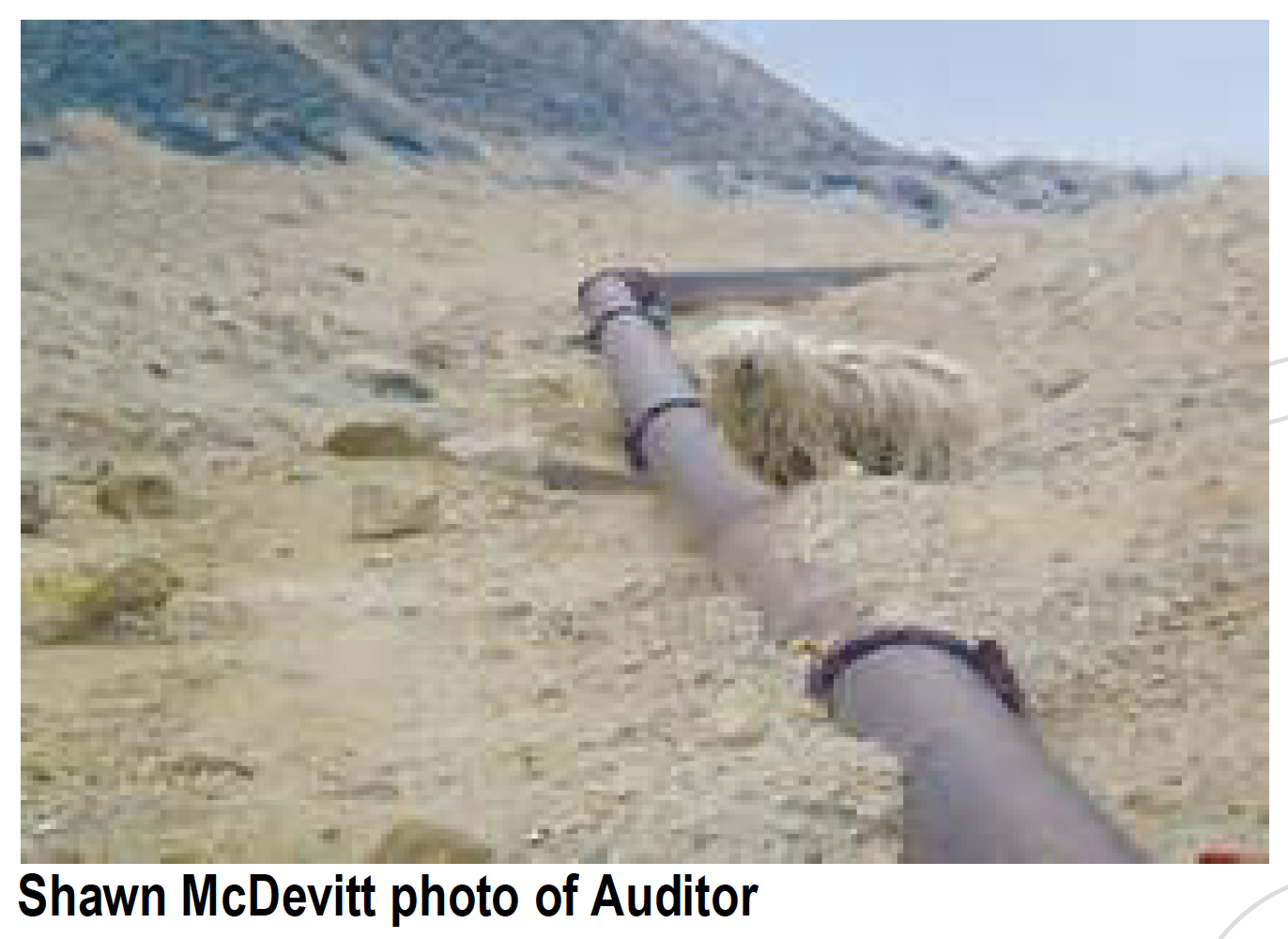
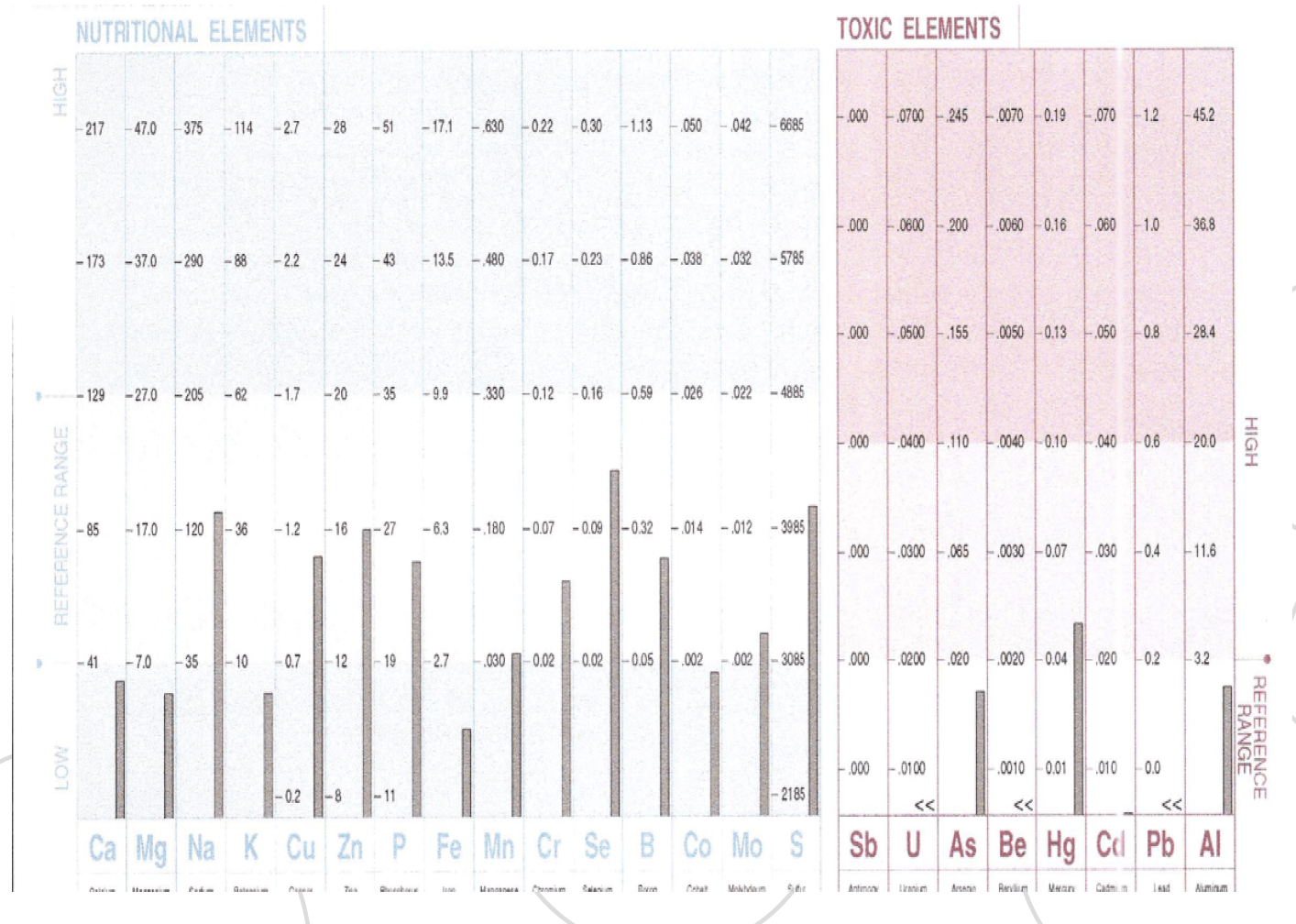
Dr. Peterson learned about a stray dog, nicknamed Auditor, who had been living in the area for years. The fact that Auditor was a resident of the toxic pit intrigued Dr. Peterson, who eventually tracked him down and obtained a hair sample for hair mineral testing. As can be seen from the HTMA test results of Auditor, extensive heavy metals and toxic elements were found when compared to a typical household pet not exposed to such an environment.
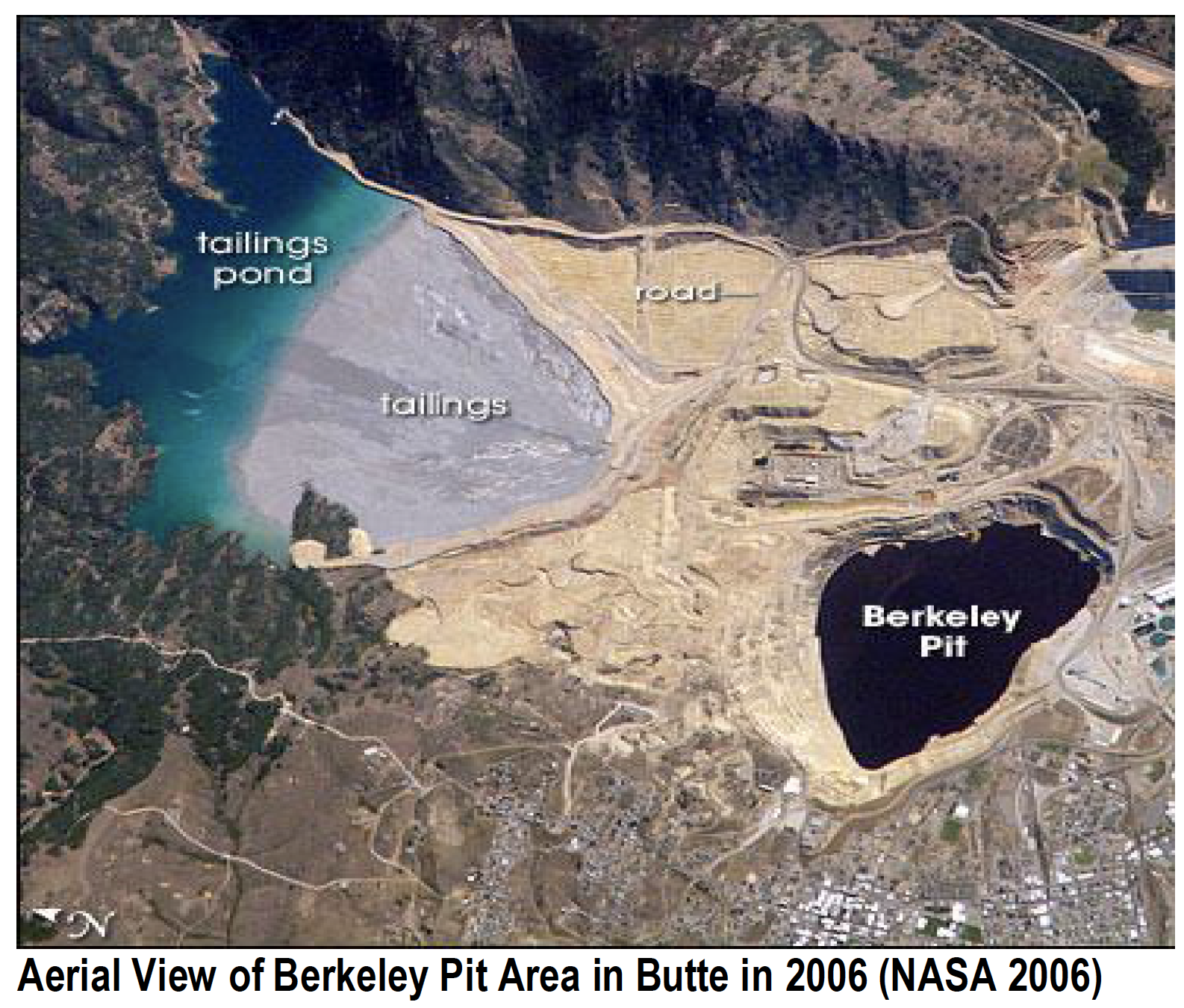
Dr. Peterson then launched a project collecting samples for mineral analysis from hundreds of pets in and around Butte to screen for metals present in residences, homes, and yards. The results found high amounts of heavy metals in pets living near Butte compared to other locations. The differences found in Butte provided information about where the EPA cleanup was effective and where it had not yet been performed. This powerful demonstration of using hair tissue mineral analysis in biomonitoring was published in the Intermountain Journal of Sciences. Auditor's inspiration led to a monument of him, standing as a symbol of environmental causes.
As can be seen from the HTMA test results of Auditor below, extensive heavy metals and toxic elements were found. In addition, we can also see the comparison of a typical household pet that has not been exposed to such a toxic environment.
Dr. Peterson then launched her project of collecting samples for analysis of hundreds of pets in and around the town of Butte to screen for metals present in residences homes and yards. The results found high amounts of heavy metals in pets living near Butte compared to other locations and communities. The differences found in Butte provided information about where the EPA cleanup was effective and where it was not, or had not been performed. Dr. Peterson’s study was published in the Intermountain Journal of Sciences. Holly G. Peterson and Melody A. Madden http://www.intermountainjournal.org/toc/vol12num1-2.html June, 2006. Development of a New Biomonitoring Technique Using Domestic Pets as Sentinel Species.
Although Auditor has since passed away, he is remembered not only a as a resident of Butte but also a symbol of the hardships the town has seen over the years, as well as being instrumental in the desire to do the environmental study using canines as sentinels for biomonitoring of the local environment. Through the efforts of Dr. Peterson and others, a statue of Auditor was commissioned and stands as a monument of his inspiration to the people of Butte and to environmental causes everywhere.
Archeological Studies
We were contacted by our Korean representatives about performing hair element testing on mummified remains unearthed during excavations in South Korea. The first study involved a child approximately 5 years of age who lived during the 16th century. Due to burial practices and climatic conditions, the body was well preserved. The resulting mineral analysis revealed extensive heavy metals as well as some nutrient minerals that were at potentially toxic levels.
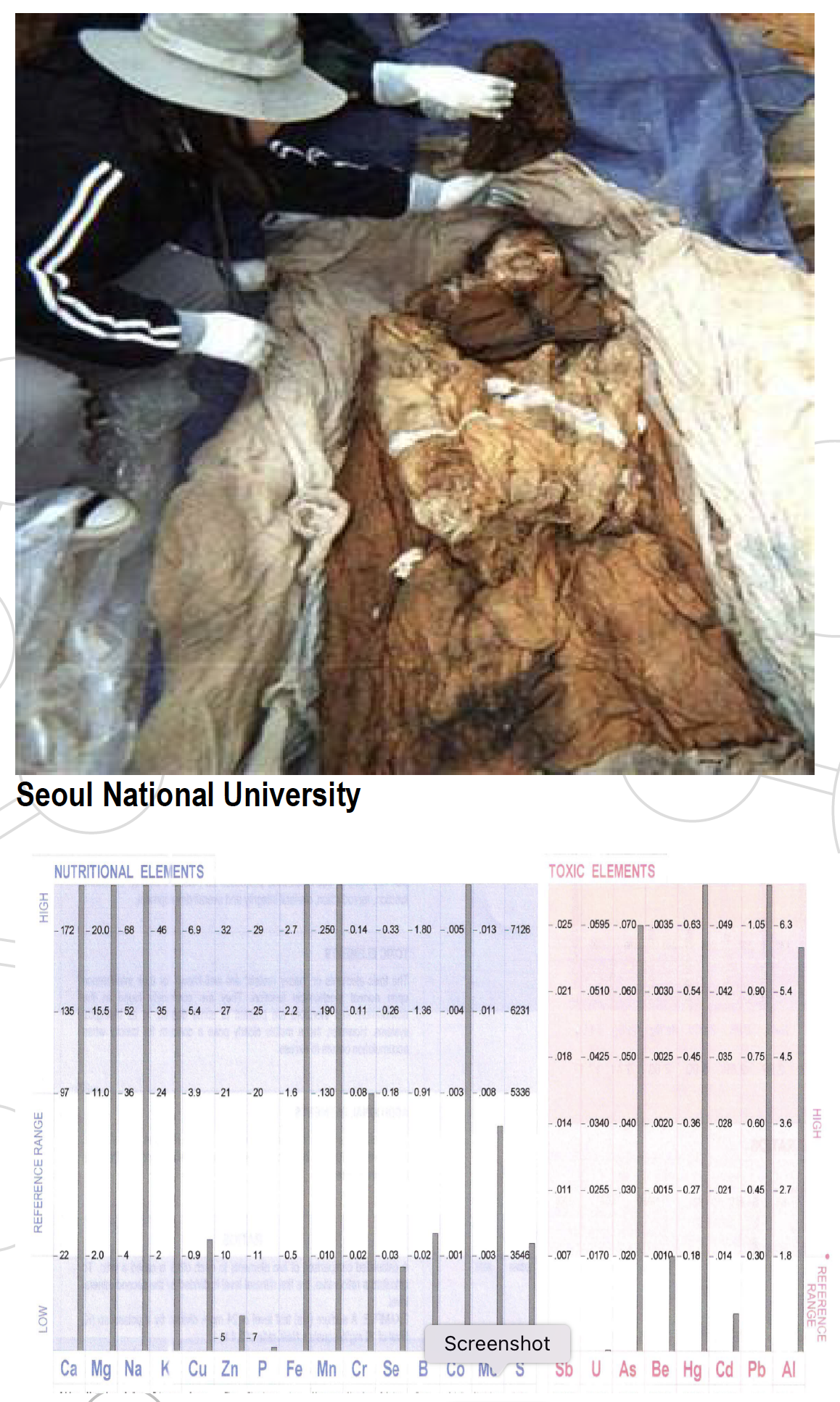
Of note was the markedly low zinc level. This result from the hair mineral analysis suggested the child had a markedly compromised immune system. The low zinc/copper ratio suggested a potential serious viral condition, and elevated iron/copper suggested a possible chronic bacterial infection. Since the Korean child mummy was well preserved, a scientific team was able to perform genetic analysis on liver tissue, finding a unique Hepatitis B virus (HBV) genotype C2 sequence. This was the first time HBV had been spotted in a mummified body. The ability of hair tissue mineral analysis to suggest an underlying viral issue proved to be a remarkable finding, predating the molecular genetic confirmation.
Similarly, we were asked to perform another archeological hair analysis for a Chinese male found preserved in the Nevada desert, believed to be one of the railroad workers from the 19th century. The test results showed excessive levels of heavy metals. Most interesting was the low zinc and very low zinc/copper ratio, similar to the results found in the Korean mummy. This finding from HTMA suggests similar health issues may have been present in both individuals. The hair mineral testing of these distant individuals reveals a similar mineral pattern, which could be related to their Asian heritage and shared mineral deficiencies, but more importantly, the zinc/copper patterns are strongly suggestive of an underlying viral condition in both, potentially exposure to the hepatitis B virus, even though they lived in different centuries and continents.
Korean child mummy holds clues to disease
As the Korean child mummy was well preserved with the organs relatively intact, a South Korean and Israeli scientific team were able to obtain liver samples for study. They performed genetic analysis on the tissue and found a unique hepatitis B virus (HBV) genotype C2 sequence that is commonly found in Southeast Asia. This is the first time hepatitis B has been spotted in a mummified body. In South Korea, about twelve percent of the population are hepatitis carriers, which is more than double the world average. An individual exposed to HBV will typically recover from the infection after a few months. However, chronic infections can last a lifetime, causing scarring of the liver, liver cancer or failure and is responsible for about 1 million deaths each year.
Using modern-day molecular genetic techniques, the researchers compared the ancient DNA sequences with contemporary viral genomes disclosing distinct differences. The changes in the genetic code are believed to result from spontaneous mutations during the virus’ evolutionary process. Based on the observed mutations rates over time, the analysis suggests that the reconstructed mummy's hepatitis B virus DNA had its origin between 3,000 to 100,000 years ago. Additional analysis of the ancient HBV genomes may be used as a model to study the evolution of chronic hepatitis B and help understand the spread of the virus, possibly from Africa to East-Asia. It also may shed further light on the migratory pathway of hepatitis B in the Far East from China and Japan to Korea as well as to other regions in Asia and Australia where it is a major cause of cirrhosis and liver cancer.
Interestingly, we were also asked to perform another archeological hair analysis by a group working with National Geographic. The hair sample was obtained from a Chinese male approximately thirty years of age whose body was found preserved for almost two hundred years in the Nevada desert. Apparently the body is one of the many Asian workers who came to America to work and help build railroads across the continent.
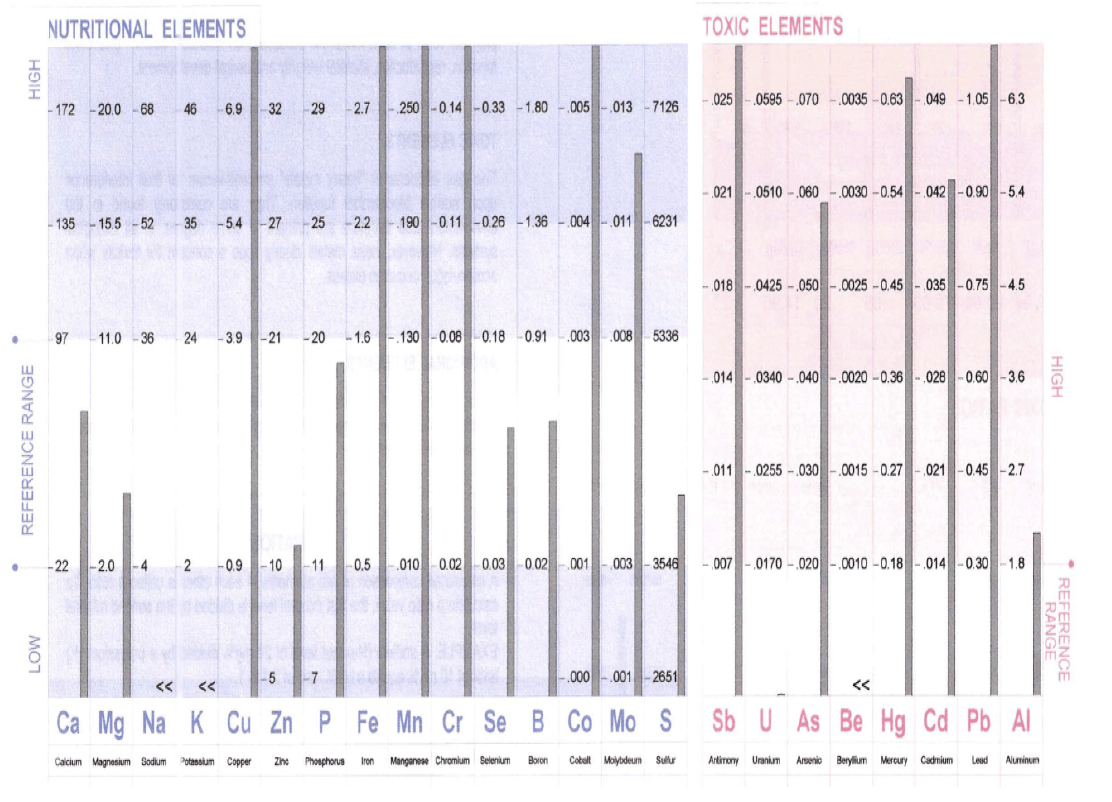
We can see from the test results the presence of excessive levels of heavy metals. However, most interesting is the low zinc and very low zinc/copper ratio similar to the results found in the Korean mummy. This would suggest similar health issues may have been present in both individuals.
The HTMA studies of these distant individuals reveal a similar mineral pattern. The samples are both from Asians which may account for the similarities seen in the zinc/copper patterns suggesting similar health issues. Of course the HTMA cannot assess the presence of HBV, but the zinc/copper patterns are suggestive of an underlying viral condition in both. The mineral pattern suggests that both individuals may have been exposed to the hepatitis B virus even though they lived in different centuries and continents.
This Article originally published by Trace Elements
Frequently Asked Questions (FAQs) About Hair Trace Elements in Archeology
What is the primary advantage of using Hair Tissue Mineral Analysis (HTMA) in environmental studies?
The main advantage of hair tissue mineral analysis (HTMA) in environmental studies is its ability to act as a long-term monitor of exposure. Unlike blood or urine tests, which show recent exposure, a hair mineral analysis provides a record of mineral intake and toxic element accumulation over several months, making it ideal for assessing chronic environmental exposure in human and animal populations.
How does hair mineral analysis assist in archeological studies?
Hair mineral testing provides valuable insights into the diet, health status, and potential causes of death of historical or ancient individuals. By analyzing the trace element patterns in the hair of mummies or historical figures, researchers can deduce information about nutritional deficiencies, heavy metal poisoning, and even conditions that suggest the presence of viral or bacterial infections, aiding in the reconstruction of life conditions.
What mineral analysis pattern in the Korean and Chinese mummies was particularly significant?
A key pattern observed through the mineral analysis was a low zinc level and a very low zinc/copper ratio in both mummified individuals. This specific pattern is often associated with a compromised immune system and strongly suggested the presence of an underlying viral condition, which was later confirmed in the Korean mummy as Hepatitis B virus (HBV) through genetic testing.
Can hair mineral testing differentiate between nutrient and toxic minerals?
Yes, a comprehensive hair mineral analysis is designed to measure levels of both nutritional elements (like calcium, magnesium, zinc) and toxic elements (heavy metals like mercury, lead, arsenic, cadmium). This allows researchers, whether conducting environmental studies or HTMA for personal health, to get a full picture of the body's elemental balance and toxic load over time.
What types of environmental contaminants were identified through hair tissue mineral analysis in the Butte, Montana study?
The study on Auditor and the pets in Butte, Montana, used hair tissue mineral analysis to screen for heavy metals and other toxic elements present in the environment due to extensive mining operations. The mineral analysis successfully identified elevated levels of various heavy metals, proving the effectiveness of using domestic pets as sentinel species for biomonitoring a toxic environment.

Dr. Michael Rudulph Maxon, AKA Johnny Delirious, Laboratory Naturopathic Doctor, gives expert advice rooted in holistic healing principles, drawing on 40 years of professional experience in the health industry. He helps his patients recover and heal using food and Ancient Greek therapies, utilizing organic remedies that are all backed by modern laboratory science. He is unquestionably the only TRUE Addiction & Hepatitis A, B, and C Recovery Pioneer. Free of mood-altering substances (cocaine) since 1991, with no viral load or antibodies of hepatitis since 1994, and no cirrhosis since 1995. Nobody in his life—including doctors, friends, and family—thought he would live past 1992; they all said he was going to die. But, Johnny chose life, not death, and learned how to heal his body, mind, and spirit by developing new protocols with natural therapies, including the thoughtful application of homeopathic remedies where appropriate. For over 20 years, he has helped many others recover, including professionals like doctors, dentists, and lawyers, who prefer alternative medicine over chemical drugs or surgery to address the same conditions that everyone said were hopeless.
Contact Johnny for a Hair Tissue Mineral Analysis (HTMA) to get the right diet, supplements, and expert advice, benefiting from his 30 years of experience in these specialized protocols.
United States - 972-825-7912
http://www.johnnydelirious.com