Aluminum in Deodorant: The Myth
Introduction
Aluminum in deodorant is a topic that has sparked widespread debate and concern among consumers. With millions of people using underarm products daily, questions about their safety, potential health risks, and the role of aluminum compounds as the active ingredients in many antiperspirants have become increasingly important. This article is designed for consumers who are concerned about deodorant safety and want clear, science-based answers. Here, we will explore aluminum’s role in deodorant, address health concerns and common myths, including how people are routinely exposed to these chemicals through everyday underarm products, review the latest scientific findings, and discuss safe alternatives for those seeking peace of mind. Understanding the facts about aluminum in deodorant matters because of its widespread use, and many women worry about a possible breast cancer connection alongside the broader public health interest surrounding this everyday product.
Understanding Aluminum in Deodorant
Before diving into the details, it’s important to clarify the difference between antiperspirants and deodorants. Antiperspirants are designed to stop or significantly reduce sweating, while deodorants target odor-causing bacteria in the armpits with antimicrobial agents and fragrances rather than reducing sweat. Many over-the-counter sticks are labeled as both antiperspirants and deodorants, meaning a traditional aluminum based antiperspirant combines aluminum to stop sweat and antimicrobial compounds to combat odor.
The Role of Aluminum in Antiperspirants
Aluminum compounds are the antiperspirant active ingredients, and they are used to temporarily block sweat ducts so less sweat reaches the skin's surface. Each aluminum salt helps aluminum work by forming a temporary gel-like plug in sweat glands at the skin's surface, which reduces perspiration and helps control body odor. Different products use different strengths and formulations for sweat control, including aluminum chlorohydrate, Aluminum Zirconium Tetrachlorohydrex GLY, and Aluminum Chloride.

Research on absorption through underarm skin shows it is minimal, with about 0.012% absorbed into the body—far less than from food, even when applied near pores. Major organizations such as the American Cancer Society and the CDC state there is no clear evidence that aluminum in underarm products causes breast cancer or that this limited absorption is harmful to underarm skin or breast cells. Research also has not found higher aluminum levels in breast cancer tissue than in normal breast tissue.
Now that we’ve covered how aluminum functions in antiperspirants, let’s address some common myths and health concerns.
Common Myths and Claims
Toxins and Body Odor: Common Claims
A common belief is that body odor is caused by toxins building up in the body, and that the lymphatic system and skin are trying to purge them out. The arm pit area is often described as “grand central station” for lymphatic glands, leading to the idea that toxins concentrate there and cause odor when we perspire.
Some sources claim that as we age, toxins—including aluminum from antiperspirants—build up in the body, disrupt hormones, and increase the risk of diseases like breast cancer. However, major health organizations, including the American Cancer Society and the CDC, state there is no clear evidence linking aluminum in underarm products to breast cancer or other major health risks. Some researchers and scientists have explored possible links, but the evidence remains unclear. Extensive scientific reviews have investigated and largely debunked major health concerns associated with aluminum in antiperspirants. Research has not shown that breast cancer tissue contains more aluminum than normal breast tissue, and most studies have not found a significant association between antiperspirant use and breast cancer risk, though some rely on self-reported product histories that ask participants to recall exposures, which can limit reliability.
Aluminum, Hormones, and Cancer: What Science Says
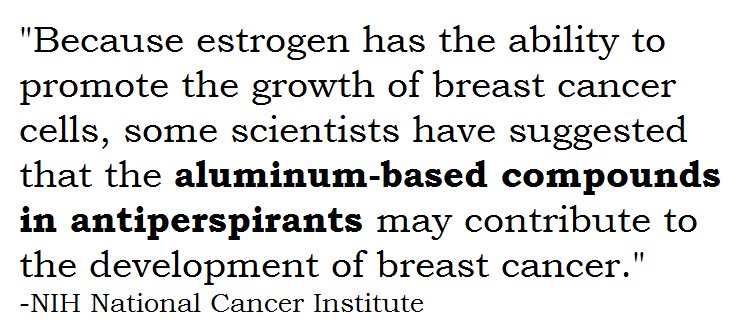
Claims that aluminum and other compounds in antiperspirants disrupt the endocrine system, increase estrogen, or directly cause cancer often focus on estrogen receptors and possible changes in breast-cell growth, but current scientific evidence does not confirm that mechanism. The Centers for Disease Control and Prevention state that minimal aluminum absorption through the underarm is not harmful, and although some have theorized effects on estrogen receptors, major organizations say typical underarm exposure has not been shown to increase risk. Major health organizations agree that aluminum compounds do not pose a health risk to the average person.
Concerns about Alzheimer's disease have also been studied, but the Alzheimer's Association and dermatology research do not support a strong evidence-based link. Transitioning from these myths, let’s look at detoxification methods and alternative deodorant options for those who still wish to avoid aluminum.
Detoxification and Alternatives
Detoxification Methods
For those concerned about toxins and body odor, some advocate for detoxification programs such as regular enemas, colonics, or the use of activated charcoal. While these methods are popular in some wellness circles, it's important to note that sweat glands do not expel cancer-causing toxins; toxins are primarily eliminated through urine and feces. Blocking sweat ducts with aluminum-based antiperspirants does not increase toxin buildup or cancer risk.
If you are interested in detoxification, here are some commonly suggested methods:
- Regular enemas or colonics: Some believe this helps remove toxins and reduce body odor, though scientific support is limited.
- Activated charcoal: Consuming food-grade activated charcoal (powder, tablets, or capsules) one hour after meals and at bedtime is said to help absorb toxins, provided you have regular bowel movements.
Choosing a Deodorant
If you prefer to avoid aluminum or are seeking alternatives, consider the following tips:
- Look for aluminum-free deodorants: These often use baking soda, arrowroot powder, and coconut oil to neutralize odor and absorb moisture without blocking sweat glands.
- Check for skin-friendly ingredients: Coconut oil, shea butter, and plant-based extracts can be gentler on sensitive skin.
- Avoid parabens if concerned: Paraben-free options are widely available for those who wish to avoid these preservatives.
- Test for effectiveness: Everyone’s body chemistry is different, so you may need to try a few products to find what works best for you, and switching from a conventional antiperspirant may involve an adjustment period for the underarms.
Hair Tissue Mineral Analysis (HTMA)
Have you ever looked at the Periodic Table of Elements? These elements make up everything in the universe—including us. In fact, we are the microcosm of the macrocosm. In Biblical terms, we are made in God’s image. In chemistry, we are composed mostly of about 40 elements on the Periodic Table. Our makeup is essentially the combination of elements made flesh, with the spark of spirit that gives us life.
In the Hair Tissue Mineral Analysis (HTMA), the biological activity of 37 elements is measured. They are:
- 15 important Nutritional Elements
- 8 Toxic Heavy Metals
- 14 Trace Elements
With the information from the HTMA, we now know what is available and being used in the body or what is lacking. Health begins to deteriorate when cell metabolism does not have the right foods and elements it needs. A mineral imbalance follows. Over time, function goes down and structure begins to lose its integrity. With the right foods and a balance of elements on a daily basis, the body’s cells will repair and reverse aging.
The HTMA will show:
- How to avoid disease states
- Any toxic or heavy metal overload
- A complete profile of 37 different elements
- The correct diet schedule based on your biochemistry
Contact Johnny to order your HTMA today - $226 USD
Best Selling author Johnny Delirious worked with one of the first pioneers to use the scientific modality—Hair Tissue Mineral Analysis (HTMA)—to get the right diet and supplements to experience life free of disease. The guessing game to achieve good health is over. Today he gives his expert advice with over 40 years of experience as a professional in the health industry.
Frequently Asked Questions About Aluminum in Deodorant
Does aluminum in deodorant increase breast cancer risk?
Most case control studies have not found a clear link between aluminum deodorant use and an increased breast cancer risk. Women are far more likely to develop breast cancer than men, though men can also develop breast cancer, and current evidence does not show antiperspirant use increases that risk. Major health organizations state there is no strong evidence supporting this claim, but more research is suggested for conclusive results.
Can aluminum compounds in deodorants cause skin irritation?
Yes, aluminum-based antiperspirants can sometimes cause skin irritation such as redness, itching, or contact dermatitis, especially upon initial use.
How do aluminum-based antiperspirants work?
Aluminum compounds work by blocking pores in the sweat duct, forming a gel-like plug that reduces sweat reaching the skin’s surface. This helps control sweating and body odor.
Are aluminum-free deodorants effective?
Aluminum-free deodorants often use ingredients like baking soda and natural antibacterial agents to neutralize odor and absorb moisture without blocking pores, allowing natural perspiration while keeping you smelling fresh.
Is the absorption of aluminum through the skin harmful?
Studies show that dermal absorption of aluminum from antiperspirants is minimal (about 0.012%) and significantly less than what is absorbed from food. Current evidence suggests this level of exposure is not harmful.
Should I avoid antiperspirants if I am concerned about health issues?
If concerned about possible links between aluminum and health issues, some people prefer aluminum-free deodorant alternatives for personal comfort, ingredient preferences, or concerns about the environment. However, the scientific consensus currently finds no clear health risk from typical antiperspirant use.
What are cancer-causing toxins and do antiperspirants block their release?
Sweat glands do not expel cancer-causing toxins; toxins are primarily eliminated through urine and feces. Blocking sweat ducts with aluminum-based antiperspirants does not increase toxin buildup or cancer risk.
Why do some deodorants cause yellow stains on clothes?
Aluminum salts in antiperspirants can react with sweat to produce yellowish stains on clothing, which can be difficult to remove; although the same metal is also used in familiar items like cans or foil, these marks happen because aluminum salts react with sweat on fabric.
Are parabens in deodorants a concern?
Parabens are preservatives that mimic estrogen and are sometimes found in deodorants. While lab studies suggest weak estrogen-like activity, most case control studies have not found a direct link to breast cancer. Paraben-free options are available for those concerned.
How can I choose a deodorant that suits my skin and health preferences?
People prefer deodorants based on effectiveness, skin sensitivity, and ingredient concerns. Aluminum-free deodorants with natural ingredients like baking soda, coconut oil, and essential oils offer alternatives with less risk of skin irritation and no aluminum exposure.
Now that we've answered some of the most common questions, let's explore how you can assess your body's mineral balance and overall health.

Dr. Michael Rudulph Maxon, AKA Johnny Delirious, Laboratory Naturopathic Doctor, gives expert advice rooted in holistic healing principles, drawing on 40 years of professional experience in the health industry. He helps his patients recover and heal using food and Ancient Greek therapies, utilizing organic remedies that are all backed by modern laboratory science. He is unquestionably the only TRUE Addiction & Hepatitis A, B, and C Recovery Pioneer. Free of mood-altering substances (cocaine) since 1991, with no viral load or antibodies of hepatitis since 1994, and no cirrhosis since 1995. Nobody in his life—including doctors, friends, and family—thought he would live past 1992; they all said he was going to die. But, Johnny chose life, not death, and learned how to heal his body, mind, and spirit by developing new protocols with natural therapies, including the thoughtful application of homeopathic remedies where appropriate. For over 20 years, he has helped many others recover, including professionals like doctors, dentists, and lawyers, who prefer alternative medicine over chemical drugs or surgery to address the same conditions that everyone said were hopeless.
Contact Johnny for a Hair Tissue Mineral Analysis (HTMA) to get the right diet, supplements, and expert advice, benefiting from his 30 years of experience in these specialized protocols.
United States - 972-825-7912
http://www.johnnydelirious.com